Why Is My Electricity Bill Still High After Switching to LED Lights?
- goldeneyelighting
- May 26
- 3 min read
Introduction
Many people switch to LED bulbs expecting an immediate drop in their electricity bills. So it can be frustrating when the bill barely changes or still feels high.
The truth is, LED bulbs alone are not a complete solution to energy savings. While they are a major part of Sustainable LED Lighting, your overall electricity usage depends on several other factors like appliances, usage habits, and lighting design.
In this blog, we’ll break down the real reasons your bill is still high and how you can actually make LED lighting work for you.
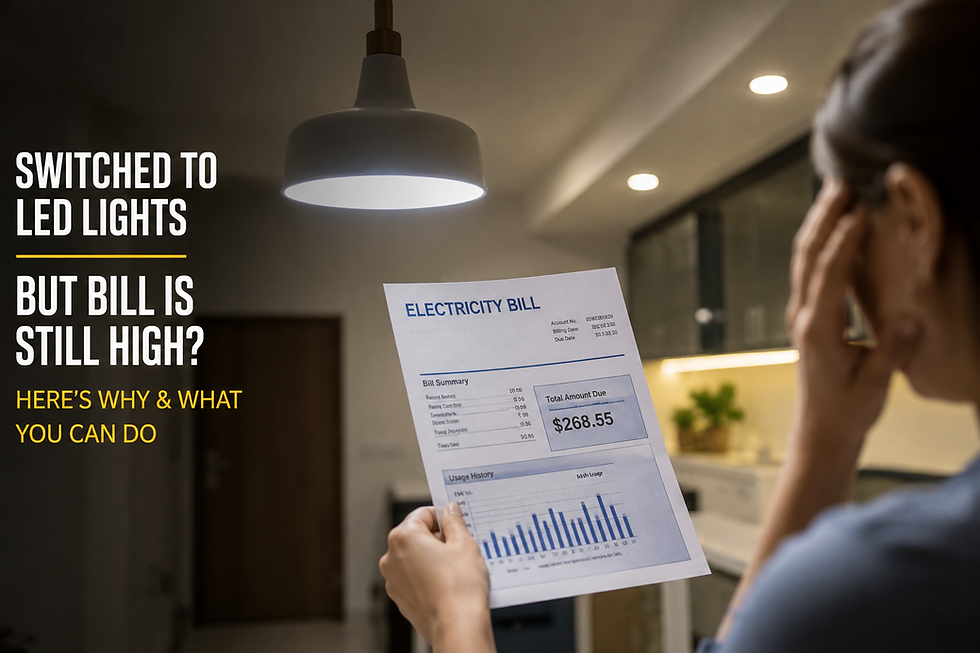
Why Your Electricity Bill Is Still High
1. LED Lights Use Less Power, But They Don’t Reduce Usage
LEDs consume less electricity, but they don’t stop energy waste elsewhere.
For example:
You may leave lights ON for longer hours
More lights may be installed than before
Other appliances still consume high power
So even with Sustainable LED Lighting, total usage matters more than bulb type alone.
2. Other Appliances Consume Most of the Electricity
In many homes, lighting makes up only 10–20% of electricity use.
The major power consumers are:
Air conditioners
Water heaters
Refrigerators
Washing machines
Microwave ovens
So even if you switch fully to LEDs, your bill may stay high if these appliances are heavily used.
3. Wrong Wattage or Poor Lighting Choices
Not all LED bulbs are optimized for efficiency.
Common mistakes include:
Using higher watt LED bulbs unnecessarily
Installing too many lights in one room
Using non-dimmable LEDs in bright spaces
Proper planning of Sustainable LED Lighting can significantly reduce energy waste.
4. Poor Lighting Design and Installation
Lighting design plays a big role in energy efficiency.
For example:
Poor placement leads to over-lighting
No zoning (separate switches for areas)
Incorrect fixtures wasting light output
A well-planned setup using solutions like Recessed Lights for T Bar Ceiling can distribute light more efficiently and reduce the number of fixtures needed.
5. Hidden Energy Consumption (Standby Power)
Even when devices are off, they still consume power:
TVs on standby mode
Chargers plugged in
Wi-Fi routers running 24/7
Smart devices always connected
This “phantom load” can significantly increase your bill even if lighting is efficient.
Role of Sustainable LED Lighting
Sustainable LED Lighting is not just about using LED bulbs—it’s about building an energy-efficient system.
True sustainability includes:
Proper lighting design
Smart usage habits
Efficient appliances
Reduced unnecessary consumption
LEDs are the foundation, but not the full solution.
Importance of Proper Lighting Setup
Choosing the right lighting design improves efficiency dramatically.
For example:
Recessed Lights for T Bar Ceiling help distribute light evenly in offices and commercial spaces
Fewer fixtures can cover larger areas effectively
Better spacing reduces energy waste
A well-designed lighting plan often saves more energy than simply switching bulbs.
Role of Professional Lighting Solutions
Sometimes, DIY setups are not optimized for efficiency.
Professional providers such as a Led Lighting Company California (as an example of industry expertise) typically focus on:
Energy audits
Lighting layout planning
Smart lighting integration
Compliance with energy efficiency standards
These services ensure lighting systems actually deliver real savings, not just efficient bulbs.
Benefits of Environmentally Friendly Lighting
Switching to Environmentally Friendly Lighting goes beyond just saving money.
Key benefits include:
Lower carbon emissions
Reduced heat output
Longer lifespan of bulbs
Less electronic waste
Improved indoor lighting quality
It contributes to both financial savings and environmental responsibility.
How to Actually Reduce Your Electricity Bill
If you already switched to LEDs, here’s what else you should do:
Turn off lights when not needed
Use motion sensors in low-traffic areas
Upgrade old appliances
Avoid over-lighting rooms
Use natural daylight during the day
Install smart switches or timers
Optimize lighting layout
Combining these steps with Sustainable LED Lighting creates real savings.
Conclusion
Switching to LED lighting is a great first step, but it’s not the complete solution to lowering electricity bills.
Your bill stays high because of usage habits, appliance load, poor lighting design, and standby power consumption.
To truly benefit from Sustainable LED Lighting, you need a combined approach—efficient bulbs, smart design, and better energy habits.
FAQ – Sustainable LED Lighting
1. Why is my electricity bill still high after switching to LED lights?
Because LED lights only reduce lighting energy use, not total household electricity consumption. Appliances and usage habits have a much bigger impact.
2. Do LED lights really save electricity?
Yes, LED lights use significantly less power than traditional bulbs, but savings depend on how efficiently they are used.
3. What affects LED lighting energy consumption?
Factors include wattage, number of lights, usage duration, and lighting design efficiency.
4. Are recessed LED lights more efficient?
Yes, Recessed Lights for T Bar Ceiling and similar setups can improve light distribution and reduce the number of fixtures needed.
5. How does environmentally friendly lighting help?
Environmentally Friendly Lighting reduces energy waste, lowers carbon emissions, and supports long-term sustainability goals.
Comments